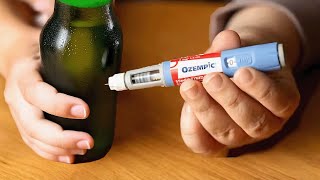
Can alcoholics ever drink moderately? Expert insights on who succeeds with controlled drinking, who doesn't, and how to know which path is yours.
Whether or not somebody can learn controlled drinking is what’s called an empirical question — it has to be determined through actual experience. I’ve been working with people on this question for over 50 years, and I still can’t predict the answer with certainty for any given person walking through my door. But I can tell you what the good predictors are, and I can tell you how to find out.
Factors That Predict Success with Moderation
Several factors consistently predict whether someone can learn to moderate their drinking, and they’re worth considering honestly before you begin.
Severity of the problem. People with milder alcohol problems have meaningfully better chances of success with a moderate drinking program than those with severe alcohol use disorder. This is one of the most reliable predictors we have. If you’re in the gray area of drinking, the odds are considerably more favorable than if you’ve crossed into severe dependence.
Past physical dependence. Have you been physically dependent on alcohol? If so, controlled drinking may not be achievable or safe. The body has a long memory for dependence, and the neurological pathways that were established don’t simply disappear.
Previous attempts at moderation. Have you tried to moderate before — even with professional help — and consistently failed? That’s important information, not a character flaw. It suggests that abstinence may be a better goal, and it’s worth listening to what your experience is telling you.
Current life circumstances. Is this a particularly difficult or troubling period of your life? People going through career crisis, marital crisis, or health crisis — that’s not a good time to attempt moderation. It requires real dedication and effort, and if your emotional bandwidth is already taxed, you’re setting yourself up for frustration.
The Missing “Off Switch”
One of the hallmarks of having a problem with alcohol is lacking a reliable “off switch”. What does this mean? It means you go into a situation intending not to drink too much — you have your own internal limit, maybe three or four drinks — and despite your best intentions, you end up having five, six, or more.
If you’ve had that experience time and time again, where your ability to cut it short and stop before you get too intoxicated is something you just don’t seem able to do, even though you’ve tried repeatedly, then the central question becomes: can you acquire a reliable “off switch” if you’ve never had one?
The honest answer is: sometimes yes, sometimes no. And the only way to find out is through a structured, professionally guided attempt.
Moderation as a Stepping Stone
Here’s something I’ve observed countless times in my practice: attempts at moderation are often the stepping stone toward abstinence. Not because moderation always fails, but because the attempt itself produces invaluable self-knowledge. If abstinence turns out to be preferable, someone will see through their own experience that moderation is too difficult for them. They arrive at that conclusion through conviction, not coercion — and that makes all the difference.
Creating an action plan for abstinence might be worth considering — not necessarily swearing you’ll never drink again, but trying abstinence for some period of time to see what you learn.
How to Find Out: The Process
Step One: Give Your Brain a Rest
You have to give your brain a rest from alcohol before you can meaningfully test whether moderation is possible. This requires being abstinent for at least a brief period — typically two to four weeks, sometimes longer — so that the biological impact of alcohol on the brain can subside and begin to recover.
This period is what I call sobriety sampling. It’s an experiment, not a life sentence. You’re not committing to never drinking again. The idea is to see how much information you can extract from this brief period of abstinence. You get a chance to identify your main triggers, learn to surf the urges and cravings, navigate social situations without a drink in your hand, and allow your brain chemistry to reset. All of that is useful data, regardless of what you decide afterward.
Step Two: Controlled Reintroduction Under Guidance
After the abstinence period, under professional guidance, you can try to acquire the ability to limit your alcohol intake and exert an “off switch” reliably. Not just on a single occasion, not just on particular occasions, but consistently — cutting it short before you become too intoxicated.
This is where working with an addiction psychologist becomes essential. The SAMHSA National Helpline can help you find qualified professionals. Treatment helps you identify and address the issues connected to your drinking, because when drinking becomes a problem, it essentially becomes a self-medication problem. Understanding the function and meaning of alcohol in your life is central to any lasting change.
The Honest Answer
So, can someone with alcohol problems drink in moderation? For some people, yes — with significant caveats. It requires genuine effort, especially initially. Professional guidance is essential. Those with mild to moderate AUD have better outcomes. And a period of abstinence is usually necessary first.
For others, no. Those with severe alcohol dependence, those with multiple failed moderation attempts, those with medical conditions requiring abstinence, and those who find moderation more stressful than it’s worth — for these individuals, abstinence is the clearer path. That’s not failure. It’s self-knowledge, and it’s a self-respecting path forward.
The question isn’t really “can I drink in moderation?” It’s “what works best for me?” And the only way to answer that is with honest self-assessment, professional support, and a willingness to follow where the evidence leads. If you’re wrestling with this question, a confidential consultation can help you think it through without pressure or judgment.